#theozone

.png)
Our long time partner, Max Space, came to us with a whole new challenge to make their module feel huge in space, using human characters to convey the grandeur of the design, all ahead of their promotion for upcoming launch on a SpaceX rideshare.
Do it in 3 weeks, including render times.
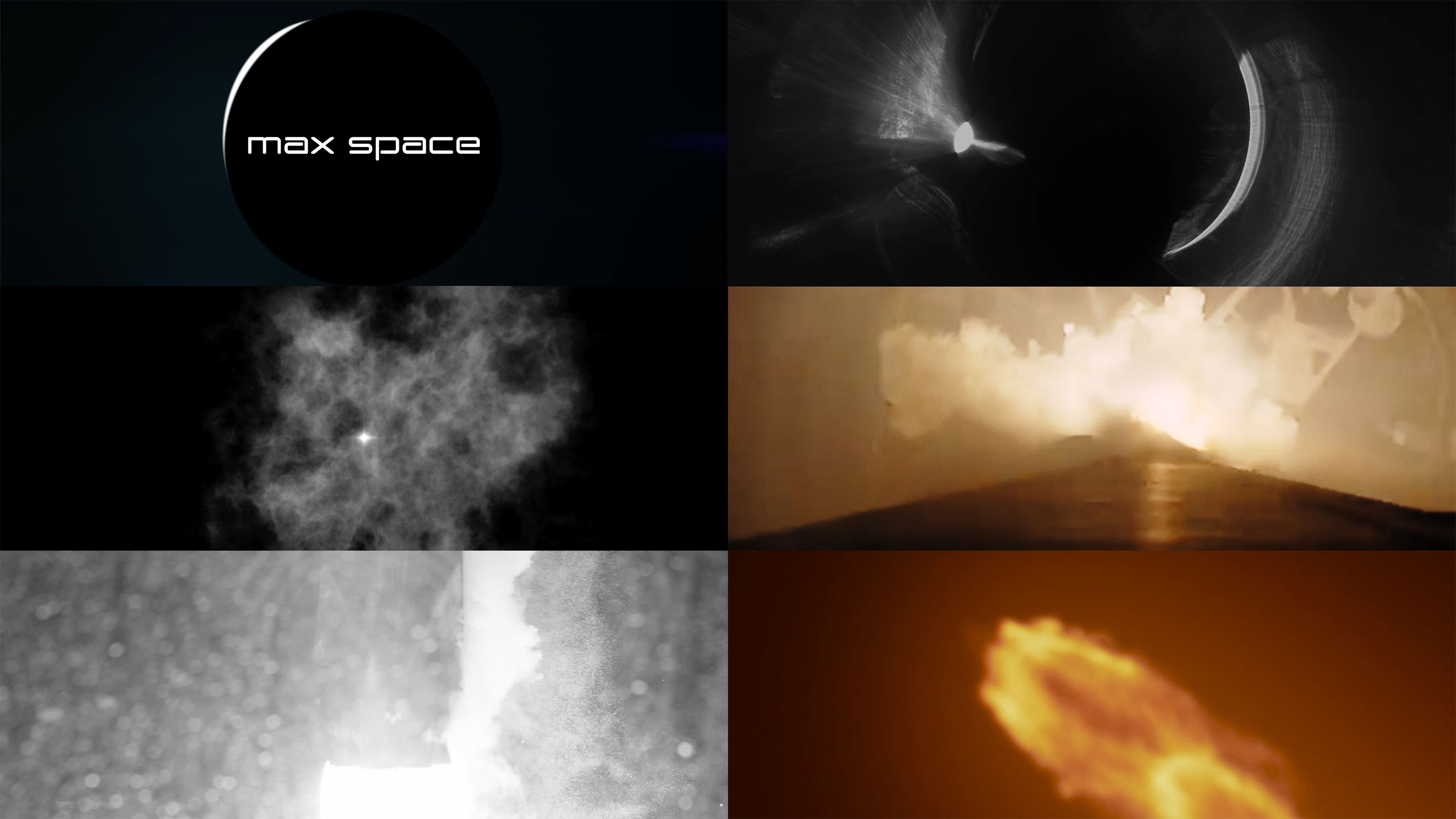
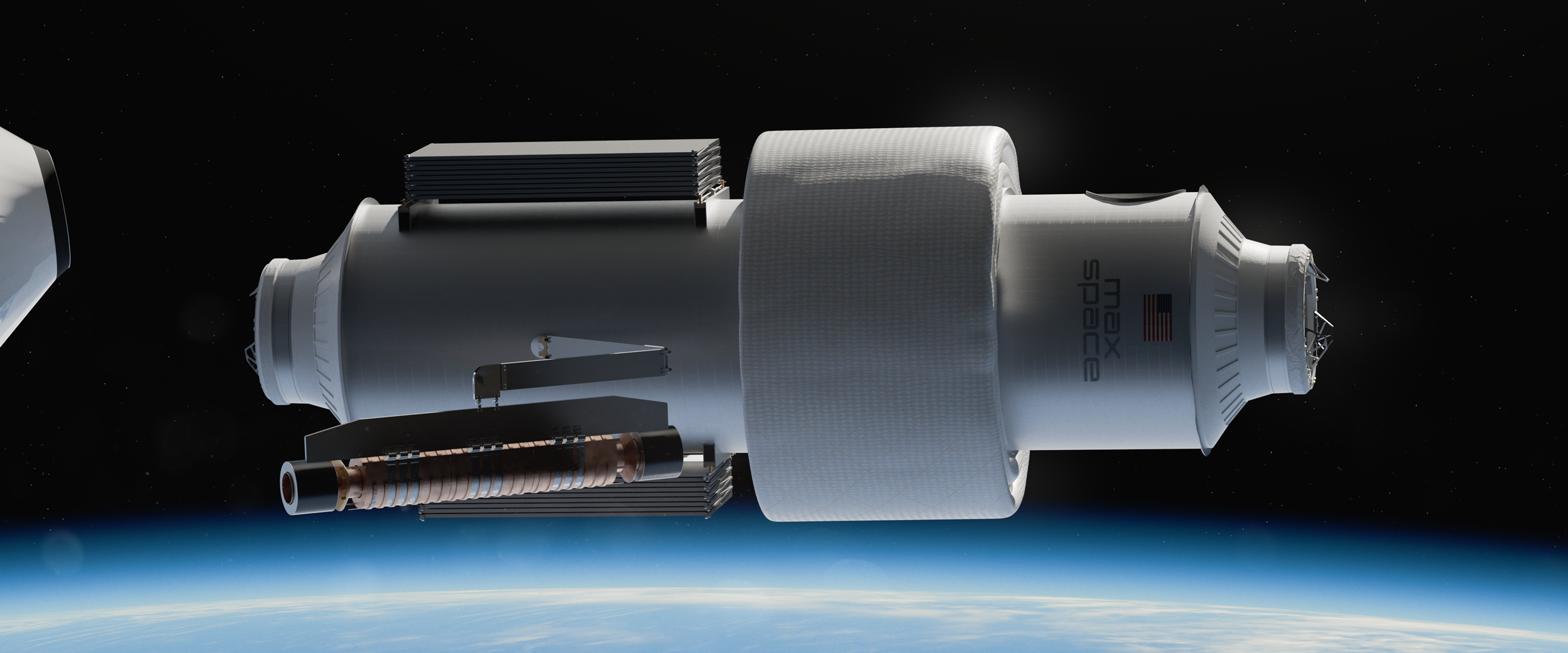
In order to accomplish such a difficult timeline for visuals that can only be considered ambitious, we got to work streamlining the most difficult elements. We separated our team's focus into 3 segments – launch, deployment and living.
While we are able to use NASA stock imagery of previous rocket launches, these clips are lengthy, low resolution and often come without audio. That meant that even the 'easy portion' of the video would still need a custom foley track built from the ground up.
For the human character placement, we procured a space jump suit, rigged to meta-human with custom designed hair. We meticulously pushed/pulled our rig for the character to articulately capture a realistic movement in ZERO-G. We payed particular attention to the relationship conveyed between the human movement and the perceived speed of the spacecraft as it orbited to create a realistic but poetic amount of action during each clip.
Keep reading to hear how we accomplished the 3D in only 3 weeks...
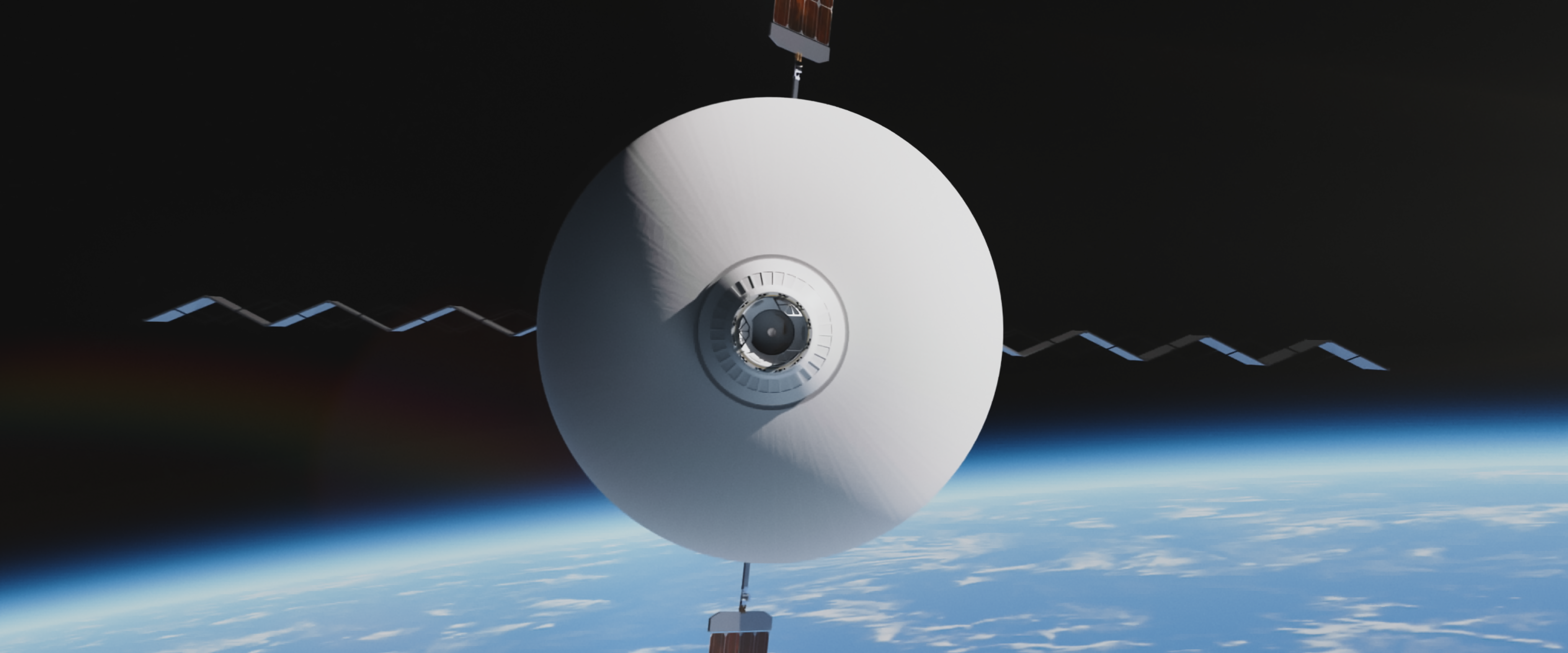
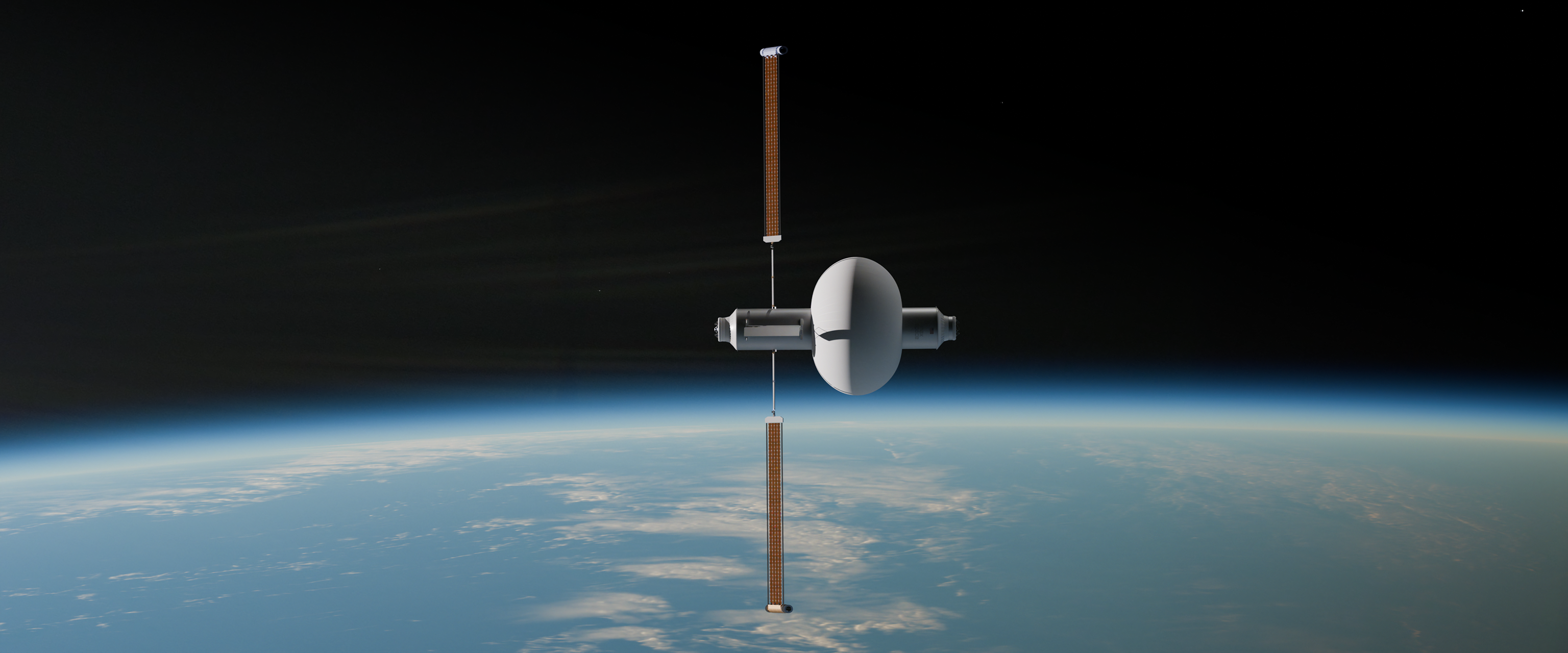
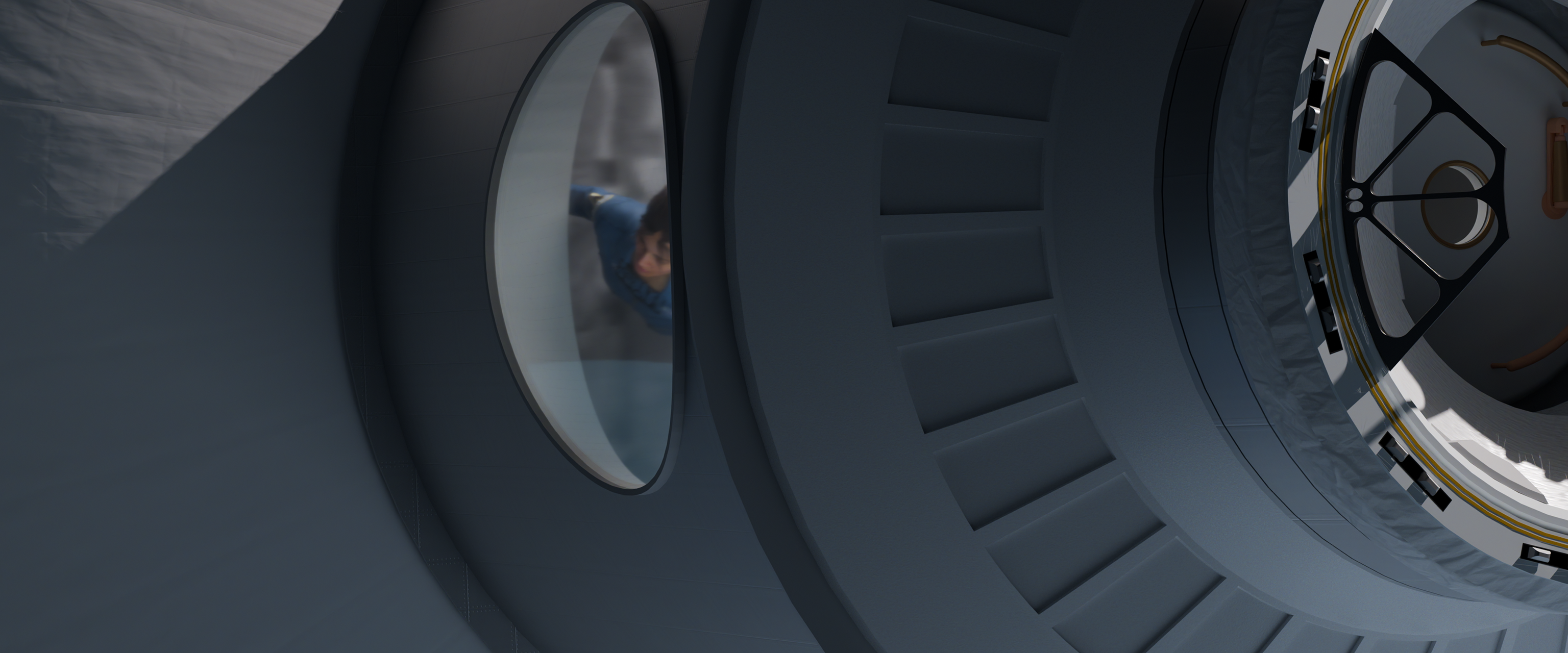
As far as the 3D work went, we were truly starting from scratch. Very few assets from the previous project could be reused due to major structural and engineering changes. Our team also had to rebuild our Earth model from the ground up using 86k bathymetry, cloud, ocean, and land textures as we needed to accurately match the module’s orbital operation which meant our module would have to be 'relatively' close to the planet.
To ensure the product felt as large and grand as possible, we chose to set all virtual cameras to 80mm or longer with a relatively closed aperture. This created dramatic depth without introducing forced perspective, which would have had the opposite effect. The longer lenses reduced the visible curvature of the Earth in the background, making the module appear larger in relation to the planet behind it, especially when paired with the subconscious sense of orbital speed.
Our team also tackled complex fabric simulations and particle generators to accurately portray the module inflating upon reaching orbit, as well as the wide, dissipating propulsion trail of the SpaceX booster as it climbed into space.
Through all of that plus several rounds of texturing iterations, and not to mention the animating, there was only one thing that allowed us to hit all objectives on time...
This allowed us to iterate quickly, solidify camera blocking rapidly and lock in animations prior to first pass renders so that the first renders, turned into the only renders needed!


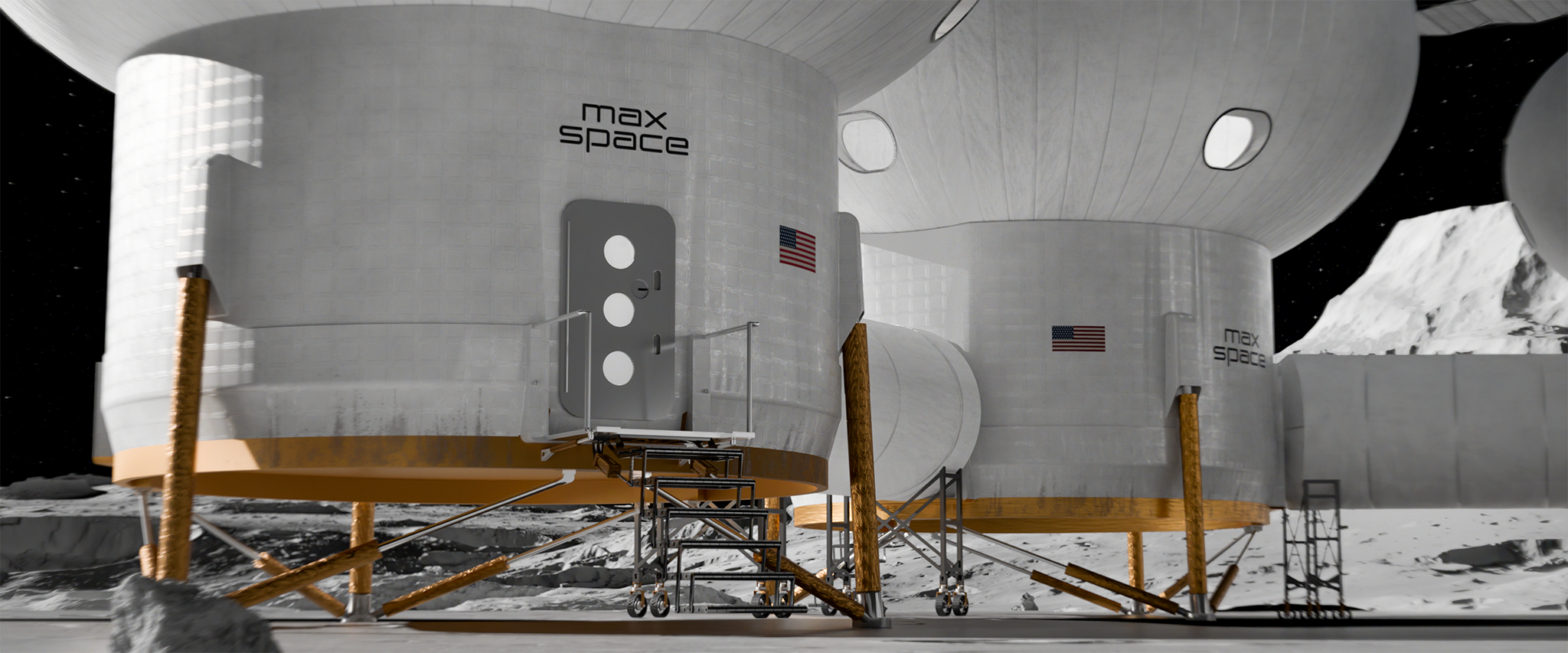
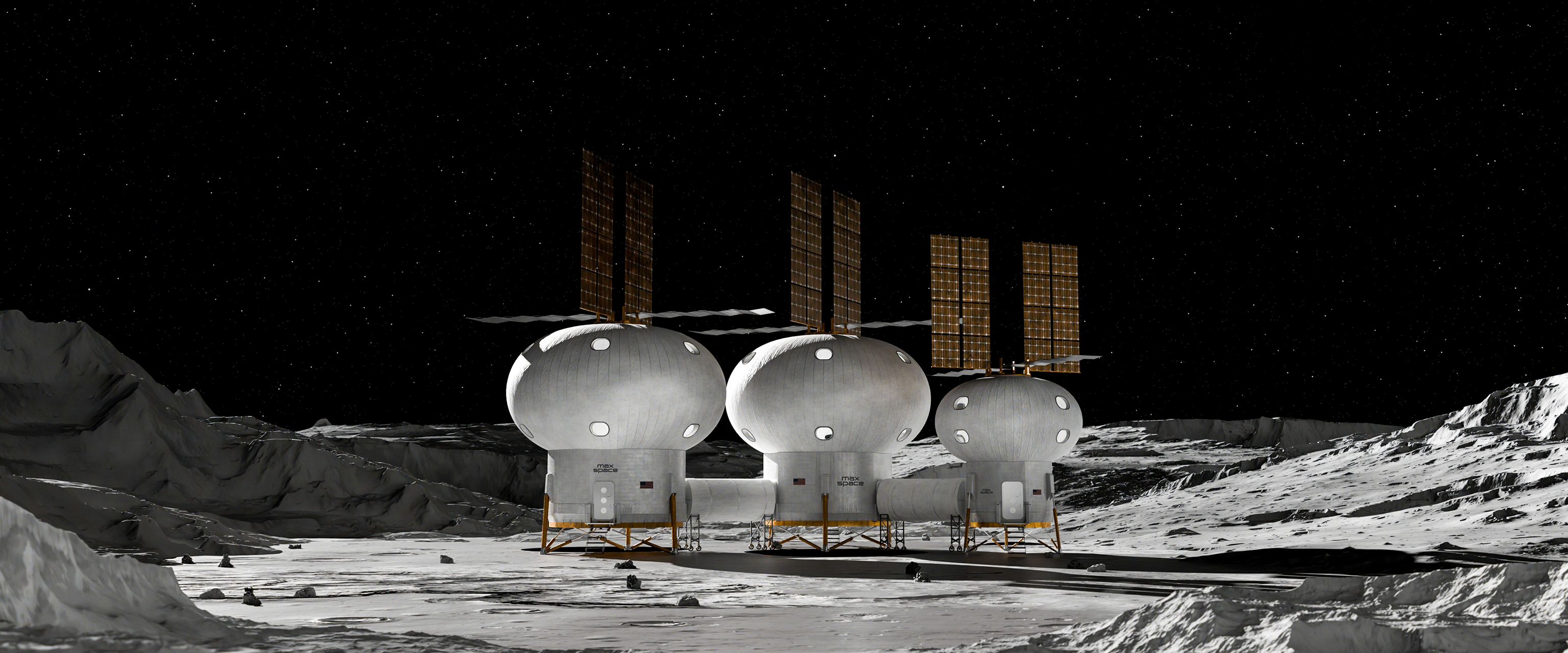
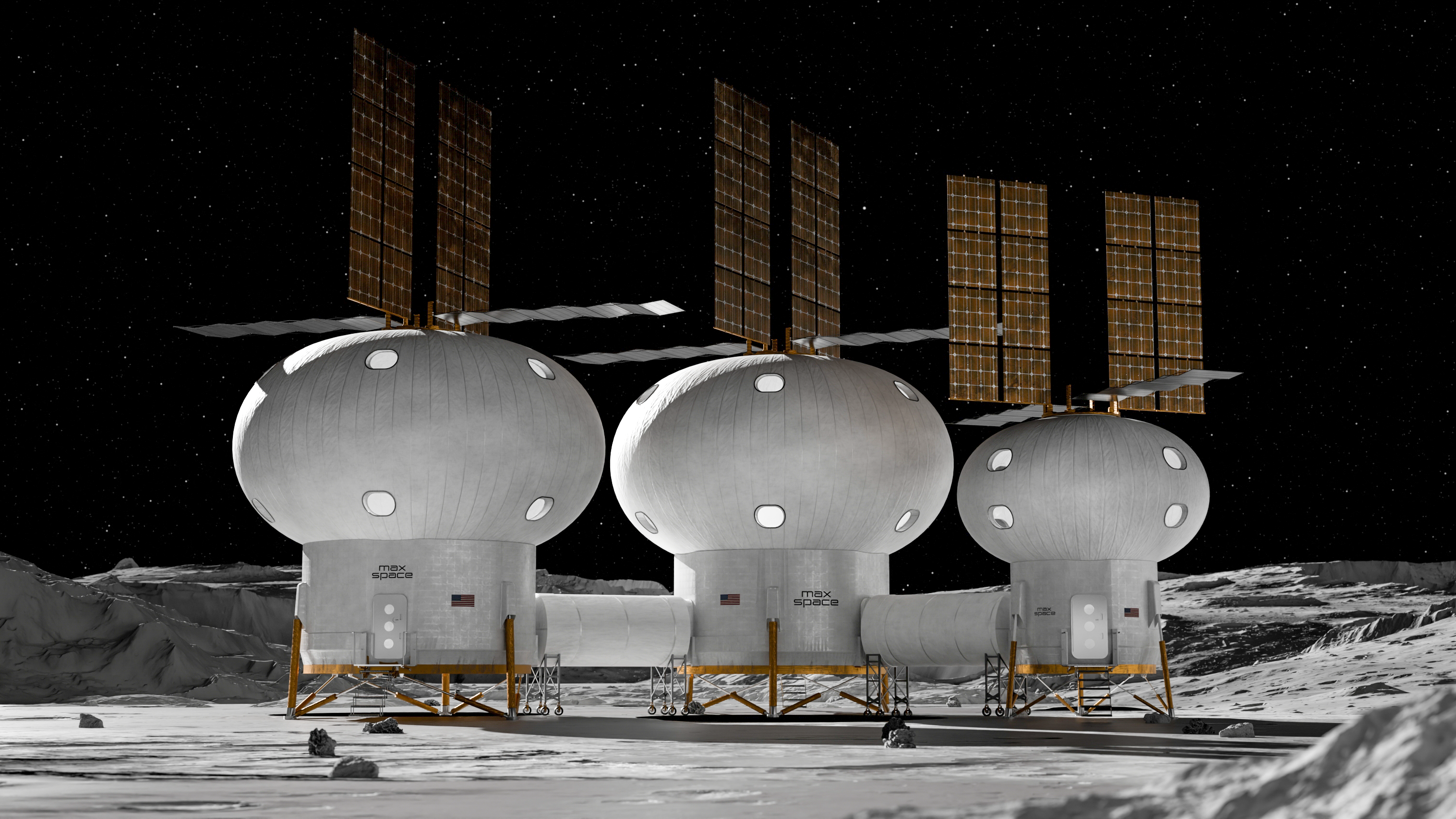
Whether it was texturing, modeling, rigging, animating, or even compositing in Fusion, our team pulled out all the stops. Late nights and early mornings were the name of the game. With over 200 man hours and over 150 render hours behind us, we delivered the final batch of assets on time in under 3 weeks from kickoff to handoff (creative development phase included).
Upon completion, to supplement the visuals for a moon-specific presentation, we carried the same speed and excitement onto the moon for a few quick still renders that kept the same texturing and creative fidelity true throughout.
You could say this was one of our toughest and most fun... all at once!